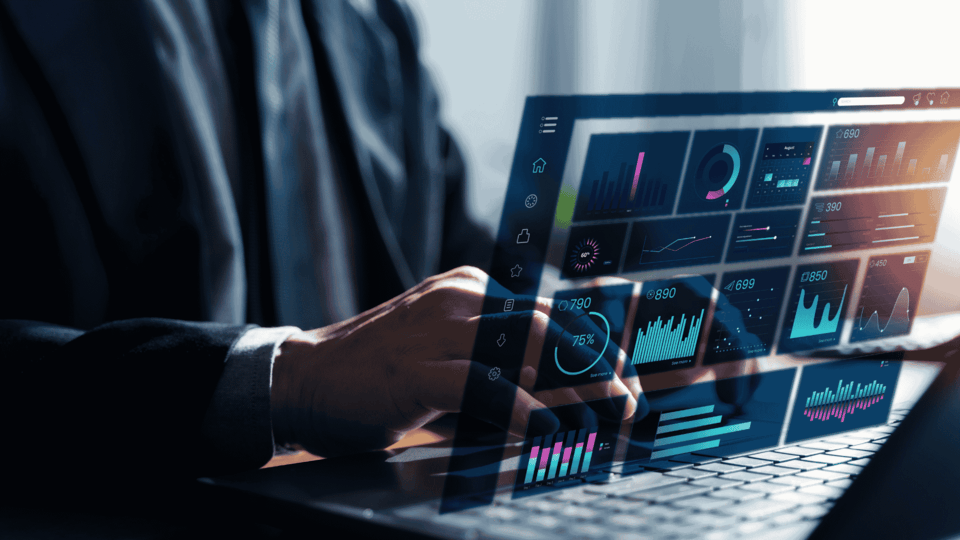
For the better part of two decades, the primary goal of enterprise software was to provide absolute visibility. Companies invested millions of dollars and countless hours into Enterprise Resource Planning (ERP) systems to gather every fragment of business data—from warehouse inventory levels to accounts payable and display it all on centralized screens. The overarching belief was that if management could just see every aspect of the business in real-time, operations would naturally run efficiently.
Today, the relentless pace of global business has exposed a critical flaw in that belief. Supply chains face daily, unpredictable disruptions. Customer demand shifts rapidly based on micro-trends. Operational costs fluctuate by the hour. In this high-speed environment, a harsh reality has emerged: seeing a problem on a screen does not help your business if your software cannot help you solve it.
Real-time visibility is a baseline requirement, but it is no longer the finish line. To remain competitive, businesses must stop treating their ERP systems as passive reporting tools. Instead, they must upgrade them into active control systems that automatically execute solutions the moment a problem is detected.
The Illusion of Total Visibility
When an ERP is designed exclusively for visibility, it creates a massive operational gap between insight and action. The software successfully identifies a problem and displays a bright red alert, but it relies entirely on a human worker to bridge the gap, figure out the solution, and execute it manually.
Consider a standard manufacturing scenario where a supplier informs your company that a critical shipment of raw materials will be delayed by two weeks. A visibility-focused ERP will update the expected delivery date and flag the inventory status on a procurement manager’s dashboard. The software has done its job perfectly by reporting the facts.
However, the actual crisis remains completely unsolved. A human manager must now notice that specific alert among dozens of others. They must calculate exactly how the delay will impact the current manufacturing schedule, open their email to contact alternate suppliers, negotiate a rush order, wait for internal financial approval, and then manually update the production timeline in the ERP to reflect all these changes. This manual process takes hours, and sometimes days. By relying entirely on human intervention to execute solutions, visibility-focused systems expose businesses to severe operational risks.
The Hidden Dangers of Passive Reporting
The first major risk of relying on visibility alone is crippling alert fatigue. In a mid-sized to large company, minor operational deviations happen hundreds of times a day. Shipments run late, machines require routine maintenance, and invoices are delayed. When a system only provides visibility, it floods managers with endless notifications. Employees quickly become overwhelmed by the sheer volume of alerts. Because every minor issue triggers a flashing light on a dashboard, workers struggle to prioritize. Consequently, critical, business-threatening problems are often ignored until it is too late to fix them cheaply.
Furthermore, passive reporting carries a high financial cost due to execution delays. In modern business, the time between discovering a problem and implementing a fix is exactly where money is lost. If a manager takes twenty-four hours to re-route an order or find a new supplier, the company loses a full day of production time. Competitors who move faster will buy up the available alternative materials. Manual execution turns software speed into human speed, completely erasing the competitive advantage of having real-time data in the first place.
Finally, relying on people to react to dashboards often leads to isolated and harmful decision-making. When workers scramble to fix issues reported by a screen in a panic, they tend to make decisions that benefit their specific department but harm the wider company. A warehouse manager might see a low-stock warning and immediately order a large volume of expensive replacement parts to avoid a stockout. They solve their immediate inventory problem, but they bypass the finance department’s current initiative to strictly manage cash flow for the quarter, creating a cash shortage elsewhere in the business.
The Thermometer Versus the Thermostat
If a dashboard only reports data, an ERP control system uses data to take immediate action. It is defined by its ability to read incoming information, compare that information against established business rules, and automatically execute transactions to keep the business running smoothly.
To understand this shift, think about the mechanical difference between a thermometer and a thermostat. A thermometer is purely a tool for visibility. You look at it, and it tells you that the room is sixty degrees. That is highly accurate data, but the thermometer does not change the temperature. If you want the room to be warmer, you must walk to the basement and manually turn on the furnace. Traditional ERP systems are essentially very expensive, highly complex thermometers.
A thermostat, on the other hand, is a control system. It reads the temperature in the room, compares it to your desired goal, and automatically turns on the furnace until the goal is reached. It connects what it sees directly to what it does. An ERP acting as a control system applies this exact logic to your enterprise operations. It removes the human bottleneck for routine issues. Instead of waiting for a manager to notice a problem and type in a solution, the ERP takes over the standard response. It drafts purchase orders, re-routes inventory, and updates schedules automatically.
Moving from Insight to Action on the Supply Chain
To truly grasp the strategic value of an active control system, we must look at how it handles specific, daily operational challenges compared to a traditional passive system. Managing sudden supply shortages is a perfect example. When a supply chain breaks down, speed is your only viable defense.
In a passive approach, the system simply flags an incoming shipment of steel as delayed. Production continues exactly as scheduled until the steel physically runs out on Tuesday morning, causing the entire factory floor to shut down unexpectedly and sending managers into a panic.
A control system approaches this entirely differently. The moment the system detects the supplier delay, it triggers a fully automated workflow. It instantly scans your database of secondary suppliers for available stock and current pricing. It drafts a purchase order for the fastest available alternative and sends a direct push notification to the procurement director for a one-click approval. Simultaneously, the system scans the factory floor schedule and automatically pushes other jobs forward so machines do not sit idle while waiting for the new materials to arrive. The crisis is managed in seconds, not days.
Automating Demand and Floor Management
This active control is equally vital when dealing with sudden market shifts. Demand for products can spike unexpectedly, quickly draining inventory and causing companies to miss out on potential revenue. In a passive environment, a sales dashboard might show a massive increase in orders over a two-day period. Eventually, a manager notices the trend, realizes inventory is running dangerously low, and sends an urgent, company-wide email begging the sales team to stop offering volume discounts on that item.
An active ERP handles this dynamically. It tracks inventory levels against incoming orders in real-time. When it detects that an item is selling at double its normal rate, it automatically triggers preset business rules. The system instantly revokes all standard sales discounts for that specific product across all channels. It limits the quantity any single customer can buy, prioritizing the remaining inventory for your most important contract clients. Finally, it triggers an expedited work order to the manufacturing floor to begin building more.
The same logic applies to production floor interruptions. Equipment failure on a manufacturing floor instantly impacts the workflow of every other department. In an older system, an operator logs a broken packaging machine into the dashboard. The warehouse staff, however, continues to pick and stage materials for that specific machine because their printed daily task list has not changed. Labor and floor space are entirely wasted.
With a control system, the equipment sensors report the critical failure directly to the ERP. The system immediately generates and assigns a high-priority work ticket to the maintenance team. It automatically halts all warehouse picking tasks associated with that specific machine, reallocating the warehouse staff to prepare materials for functional equipment. The ERP then automatically emails the customer service team to warn them that specific client orders tied to that machine will experience a brief delay, allowing them to proactively manage customer expectations.
The Strategic Blueprint for Upgrading Operations
Shifting from passive reporting to an active control system is a strategic evolution. Companies do not need to replace their entire IT infrastructure or rip out their current software overnight. Instead, the transition should be highly methodical, focusing on adding automated capabilities to high-value areas first.
The process begins by auditing and identifying manual interventions. Business leaders must identify the execution gaps in their current systems by interviewing department managers. By asking what exactly happens after a red alert appears on a dashboard, leaders can pinpoint the alerts that require the most manual data entry, emails, and phone calls to resolve. These repetitive, manual interventions are the primary targets for automation.
Once those targets are identified, the company must establish strict, rules-based workflows. Software cannot automate chaos. Before programming automated actions into the ERP, the business leadership must agree on standard responses to common problems. If a shipment is late, the company must define the exact, approved sequence of actions, including which alternative supplier is chosen first and who approves the spend. By mapping out standard operating procedures and translating them into simple conditional rules, the system can handle routine decision-making securely.
With rules in place, the ERP can then be used to implement predictive guardrails. A true control system prevents operational errors before they occur. The software should be configured to block employees from making costly mistakes. For example, if a new sales representative attempts to process a massive order that exceeds a client’s credit limit, the system should not just log the order and wait for finance to reject it three days later. The ERP must act as a physical control mechanism, preventing the salesperson from finalizing the transaction in the system until a finance manager reviews and approves the exception.
Finally, businesses should execute a phased rollout. Attempting to automate every business process at once is a recipe for disaster. It is much more effective to start with a single department, such as procurement or inventory management, and implement automated workflows for standard, low-risk reordering processes. This allows the staff to build trust in the system’s ability to execute routine tasks correctly without human oversight. Once the first phase is proven successful and the staff is comfortable, leadership can expand the control system capabilities into more complex areas like dynamic pricing and real-time production scheduling.
The Ultimate Competitive Advantage
Dashboards, charts, and visual reports will always have a place in business management. Leadership teams will always need clear, concise summaries of overall company performance to make long-term strategic decisions. However, relying on visibility alone to run daily operations leaves a business highly vulnerable to delays, human error, and costly inefficiencies.
In a volatile, unpredictable market, the businesses that succeed will not necessarily be the ones with the most visually appealing dashboards. The winners will be the companies that execute solutions faster than their competitors. This requires enterprise software that does much more than just present the facts on a screen.
By strategically transforming your ERP from a passive observer into an active control system, you automate routine problem-solving, enforce business rules in real-time, and free your human workforce to focus on complex, creative, and strategic challenges. When your software moves from passive reporting to active execution, it stops being just a digital record of your business and becomes the actual engine driving it forward.